Ultimate Guide: Comparing the Top 10 Intimate Devices for Men
Shopping for intimate devices can feel surprisingly technical, because comfort, durability, and privacy matter just as much as stimulation. A well-made product should use body-safe materials, move in controllable ways, and look discreet enough to store without anxiety. This guide compares popular options for men with a practical focus on materials safety, automated movement, cleaning, smart features, and understated design, so you can choose with clarity instead of guesswork. The goal is not hype, but a smarter purchase.
Before diving into the full comparison, here is the article outline. First, we will look at materials safety and explain why silicone quality, plastics, seals, and cleaning routines should shape any buying decision. Second, we will compare ten common device categories and show how they differ in effort, comfort, portability, and maintenance. Third, we will assess automated movements and connected features to separate genuinely useful technology from decorative extras. Fourth, we will examine discreet design, including appearance, storage, sound, and travel-friendly construction. Fifth, we will close with a buyer-focused summary designed to help different readers match priorities with the right type of device.
1. Materials Safety: The Foundation of Comfort, Hygiene, and Long-Term Value
If there is one topic that deserves more attention than glossy marketing photos or dramatic performance claims, it is materials safety. In intimate products, the material is not just a shell around the technology. It affects feel, cleaning difficulty, odor retention, durability, and the likelihood that a product will remain pleasant to use over time. For most buyers, the safest starting point is to understand the difference between non-porous and porous materials. Non-porous options such as medical-grade silicone, borosilicate glass, stainless steel, and high-quality ABS plastic are easier to clean thoroughly because they do not trap residue as readily as softer, more porous compounds. That matters not only for hygiene, but also for product lifespan.
Silicone is often the benchmark, and for good reason. High-quality silicone has a soft, skin-friendly feel, resists tearing better than many jelly-like compounds, and typically avoids the strong chemical smell that can appear in lower-grade materials. ABS plastic is common for outer housings because it is durable, lightweight, and easy to seal around motors and charging ports. Softer sleeves may use TPE or TPR, which can feel comfortable but are usually more porous and may wear faster if they are not cleaned and dried carefully. A product can still be usable with these materials, but it requires more realistic maintenance expectations.
When comparing devices, it helps to check for a few details:
- Whether the insert or contact surface is removable for cleaning
- Whether the manufacturer specifies the material clearly
- Whether the device is waterproof or only splash-resistant
- Whether it is compatible with water-based lubricant
- Whether replacement sleeves or parts are available
Lubricant compatibility is another practical issue. Silicone-based lubricants can degrade some silicone surfaces, so many brands recommend water-based formulas as the safer default. That is not a sales gimmick; it is a preservation issue. A poorly matched lubricant can shorten the useful life of a product and alter texture over time.
In short, materials safety is where the smartest comparison begins. A device with average features but excellent materials can offer a better long-term experience than a flashy model built from vague or difficult-to-clean components. If you want comfort that survives the first week, the first month, and the first thorough cleaning session, the material list deserves close reading.
2. Comparing the Top 10 Device Categories for Men
Not every buyer is looking for the same experience, and that is why broad category comparison matters more than chasing a single supposedly perfect model. Entdecken Sie die Welt des männlichen Wohlbefindens, ein sachlicher Leitfaden zu beliebten Geräten mit Vergleich von smarter Technologie, Komfort und practical trade-offs that become obvious only after you compare form, maintenance, noise, and ease of use side by side. The market is crowded, but most products fit into a handful of recognizable formats. Understanding those formats makes it easier to narrow down the field before you begin reading individual reviews.
Here are ten common categories worth comparing:
- Manual entry-level sleeves
- Textured premium sleeves
- Warming devices
- Vibration-focused strokers
- Thrusting or oscillating units
- Rotating stimulation devices
- Air-pressure or suction-style models
- Hands-free cup designs
- App-connected smart devices
- Compact travel devices
Manual sleeves are usually the cheapest and simplest to clean, but they depend heavily on user control and arm effort. Textured premium sleeves often feel more refined and may use better elastomers, though they can be harder to dry completely. Warming devices appeal to users who value realism and comfort, but they often require extra preparation time. Vibration-focused models are common because the motors are compact, the controls are simple, and the price range is broad. Thrusting and rotating devices aim to reduce manual effort and create a more mechanical rhythm, yet they are often larger, louder, and more demanding when it comes to charging and maintenance.
Air-pressure and suction-style products tend to attract buyers who want a different sensation profile from a traditional sleeve. Their appeal lies in controlled pressure rather than aggressive motion, although proper sealing and fit become more important. Hands-free cup designs can be convenient for users who value minimal handling during use, but they vary widely in stability and noise control. App-connected models are interesting for customization, long-distance control, and saved routines, though software quality can be uneven. Compact travel devices sacrifice some power and size options in exchange for portability and discretion.
The key lesson is simple: the best category depends on your priorities. If cleaning speed matters, simpler housings usually win. If reduced effort matters, automated formats stand out. If quiet storage and subtle appearance matter, compact and minimalist models often beat feature-heavy units. A useful comparison does not ask which device is universally best. It asks which design makes the fewest compromises for the kind of user you are.
3. Automated Movements and Smart Technology: What Actually Improves the Experience
Automation is one of the most talked-about features in modern intimate devices, but it is also one of the most misunderstood. Buyers often assume that more motion patterns automatically mean a better product. In reality, the value of automation depends on control quality, consistency, ergonomics, and whether the motor system works with the device shape rather than fighting it. A weak motor with ten modes can feel less satisfying than a well-tuned motor with three. Good automation is not about quantity. It is about usable variety.
Most devices with automated movement fall into a few mechanical families: vibration, pulsation, oscillation, thrusting, rotation, or pressure modulation. Each one changes the experience differently. Vibration is easy to implement and often quieter, which is why it appears in many compact models. Oscillation and thrusting can create a more active, less manual experience, but they usually demand a larger shell and stronger battery. Rotation tends to emphasize pattern variety, yet some users find it more gimmicky unless the internal fit is carefully designed. Pressure-based systems can feel more controlled and less mechanically noisy, though they may be less forgiving if sizing is off.
Smart features deserve the same skeptical eye. App control can be genuinely useful when it offers precise intensity adjustment, custom routines, firmware updates, travel lock settings, and a stable connection. It becomes less useful when it simply replicates buttons that already exist on the device. Bluetooth reliability, privacy settings, and interface clarity matter more than flashy animation on the screen. A smart device should reduce friction, not introduce a new one.
Here are signs that automation is likely to be worth paying for:
- Controls are intuitive and reachable during use
- Intensity shifts are gradual rather than jumpy
- The device can hold a steady speed under pressure
- Battery life supports more than a single short session
- Noise remains moderate across mid-range settings
- Cleaning access is not sacrificed for motor complexity
Battery life and charging standards are easy to overlook, yet they shape satisfaction more than many buyers expect. USB-C charging, sealed buttons, and clear battery indicators are small conveniences that often separate polished devices from frustrating ones. Think of automated movement like the transmission in a car: when it works well, you barely notice it. When it works badly, every other feature feels less impressive. The best smart technology should make the product easier to enjoy, easier to adjust, and easier to trust.
4. Discreet Design: Why Quiet Aesthetics and Thoughtful Storage Matter
Discreet design is often treated as a secondary concern, as if it only affects people who are shy about their purchases. In practice, it matters to almost everyone. A product that stores easily, avoids visual awkwardness, travels well, and does not advertise itself from across the room simply fits more naturally into daily life. Good discretion is not about embarrassment. It is about reducing friction between ownership and use. The less mental clutter a product creates, the more likely it is to remain a satisfying purchase rather than an object that quietly disappears into a drawer.
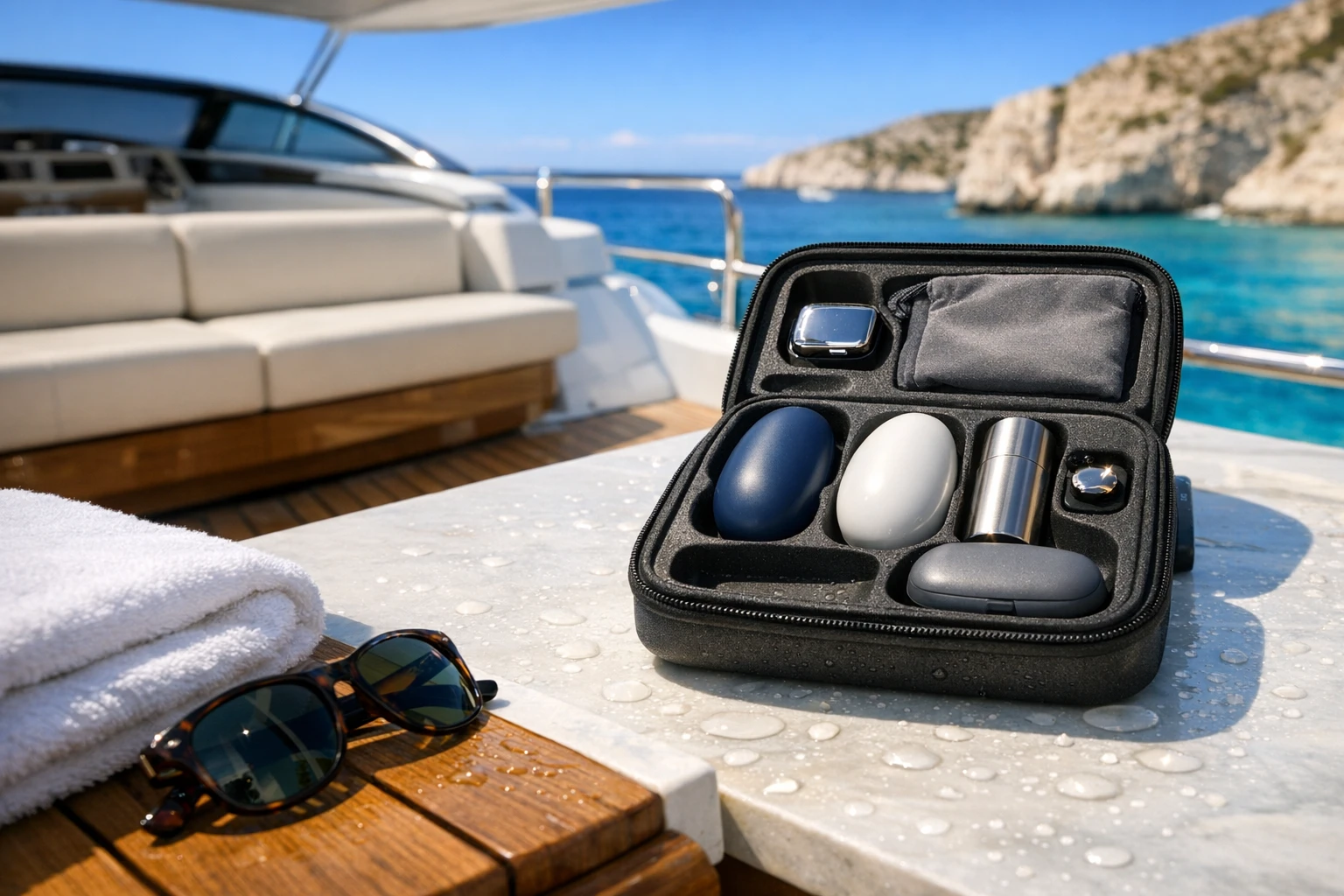
Discretion begins with shape and finish. Matte surfaces, neutral colors, clean lines, and non-anatomical silhouettes often feel more modern and easier to store than loudly themed designs. Compact charging bases, dust covers, and soft storage pouches are not decorative extras; they help preserve materials and keep the device ready without looking chaotic. A product can be intimate without looking theatrical. For many buyers, that design restraint is a major quality signal.
Noise control also belongs in the conversation. Manufacturers love to describe devices as quiet, but noise depends on where the sound is produced. A motor can be low volume in open air and still create a stronger hum once the shell resonates against a hard surface. This is why housing construction, internal stabilization, and grip points matter. A sturdy body with well-damped mechanics often sounds more refined than a lighter shell with a rattling motor, even when measured power is similar.
Useful signs of discreet design include:
- Travel lock to prevent accidental activation
- Minimal branding on the body or packaging
- Storage pouch or case included
- Stable charging method that does not require awkward adapters
- Water resistance that simplifies bathroom cleaning
- Fast drying and low-lint surfaces after washing
There is also an emotional side to discretion. Products that look polished and practical often feel easier to integrate into a mature routine. They ask less from the owner, both visually and logistically. In a market where some devices still chase novelty first and usability second, understated design can be the difference between a purchase that feels impulsive and one that feels considered. Quiet confidence, in this category, is not a poetic luxury. It is a design advantage.
5. Conclusion for Buyers: How to Match Priorities with the Right Device
If you have made it this far, the main pattern should be clear: the right intimate device for men is rarely the one with the longest feature list. It is the one that aligns most closely with your priorities. Materials safety protects comfort and hygiene over time. Automated movement can add real value when the controls are stable and the mechanics are well integrated. Discreet design influences whether the device feels easy to own, clean, charge, store, and travel with. When these three areas work together, the product usually feels more refined even before you consider premium extras.
For first-time buyers, the best entry point is often a simple, body-safe device with straightforward cleaning and moderate automation. That usually means a well-built sleeve or a vibration-focused model rather than a complex app-connected machine. For buyers who value reduced manual effort, thrusting, oscillating, or hands-free formats may be more appealing, provided they accept a larger footprint and more cleaning steps. If quiet ownership matters most, compact designs with neutral styling, sealed controls, and included storage are worth prioritizing over maximum intensity claims. And if customization is the main goal, smart devices can be rewarding, but only when app quality and battery performance are strong enough to justify the price.
A practical shortlist can be built by asking a few direct questions:
- Do I want the easiest possible cleaning routine?
- Am I comfortable maintaining softer removable sleeves?
- Do I prefer manual control or automated rhythm?
- Will noise level affect when and where I use the device?
- Do I need travel-friendly storage or a lock feature?
- Is app control a real need or just a curious extra?
For the target audience of this guide, the smartest approach is not to buy from pressure or novelty. Buy from fit. Read the material specifications. Check how the product opens for cleaning. Look at charging, replacement part availability, and storage design with the same attention you give to intensity settings. A well-chosen device should feel safe, manageable, and genuinely suited to your routine. In the end, confidence comes less from owning the most advanced model and more from understanding exactly why a particular design works for you.